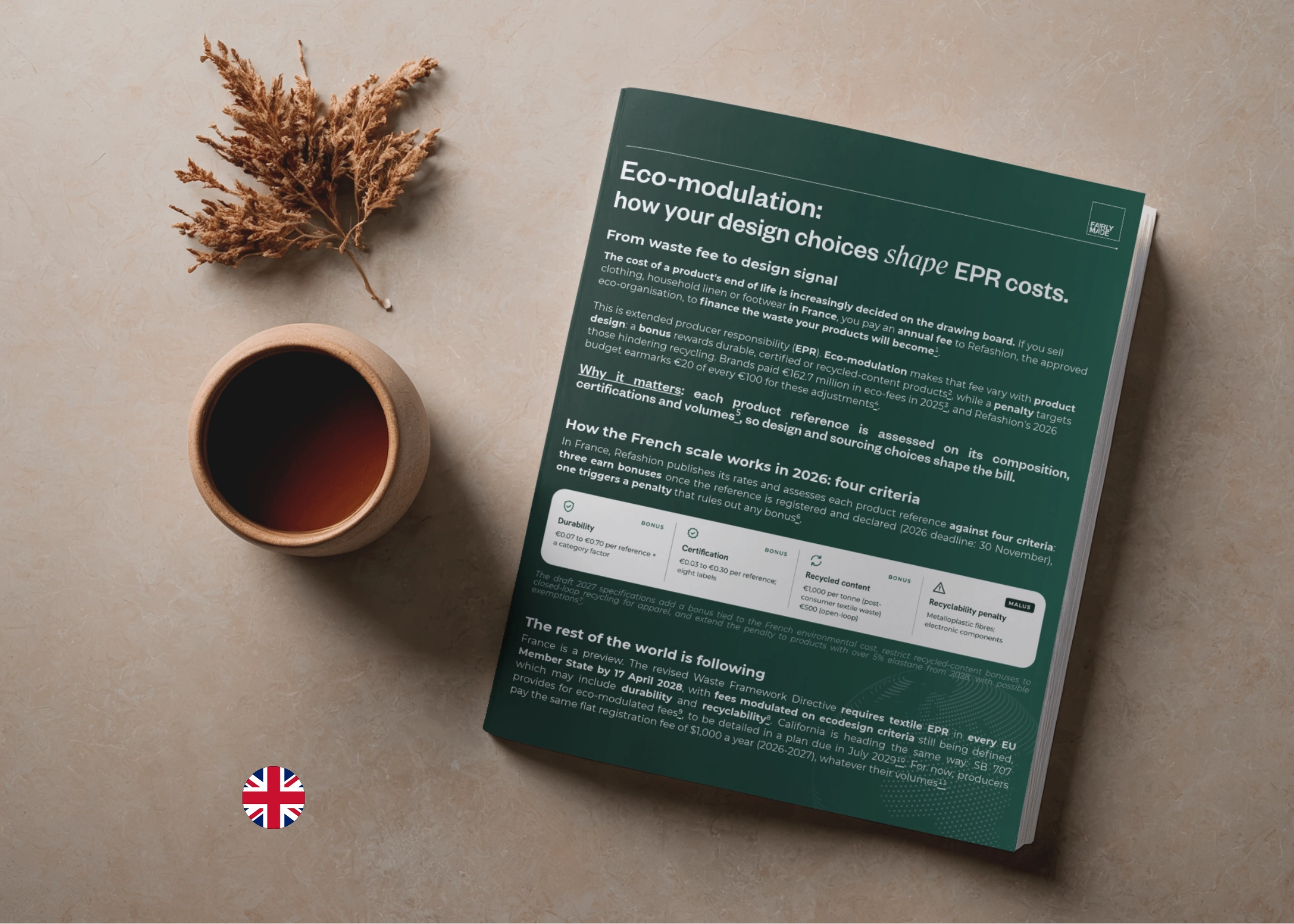
🇬🇧 Eco-modulation: how your design choices shape EPR costs
Learn how France’s textile eco-modulation turns design choices into fee bonuses or penalties, and how to simulate your products’ impact before production.
In France, eco-modulation is changing how brands pay for the end of life of their products. The annual fee paid to Refashion now includes bonuses for durable, certified or recycled-content products and penalties for those that make recycling harder: brands paid €162.7 million in eco-fees in 2025.
The model is spreading. The revised EU Waste Framework Directive requires textile EPR schemes in every Member State by 17 April 2028, and France's draft 2027 specifications would add a bonus tied to the French environmental cost.
What is being decided goes beyond a new fee. Each product reference is assessed on its composition, certifications and volumes, so product data becomes a lever where design and sourcing choices are priced.
This resource explains how the French scale works, what changes next, and what one design change looks like in practice.
What's inside
💪 The 4 criteria and published rates of the French 2026 scale: durability, environmental labels, recycled content and recyclability penalty
🤝 What the draft 2027 specifications would change, including a bonus tied to the French environmental cost
💯 How Fairly Made helps brands selling in France prepare, from structured product data to the new Ecodesign module, as well as an illustrative worked example, and what it means for the fee and the bonus


About the premium content